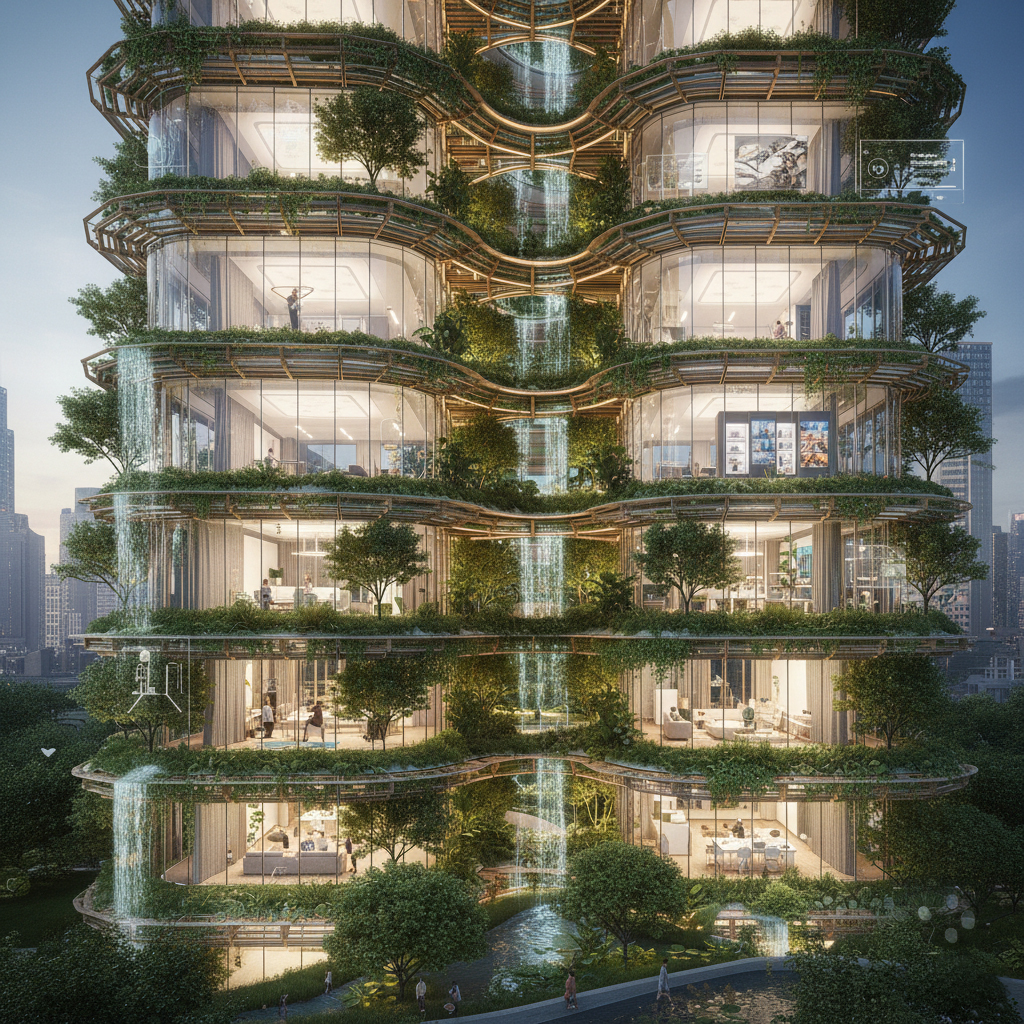
The “Living” Future of Biophilic Design and Human-Centered Architecture
At the start of the 21st century, the main agenda item for the construction and real estate sectors was to build structures that were "taller, larger, and more technological." However, by the mid-2020s, global paradigm shifts and changing lifestyle habits have fundamentally altered this equation. The new metric of success is no longer how tall a building is, but how well it makes the people who live in it "feel."
At Koray Group, we place the concepts of "Human-Centeredness" and "Biophilic Design"—which we consider integral to our technological infrastructure and smart city vision—on the table. How will this architectural journey, which reaches toward nature’s healing power, shape the cities of the future?
- Return to Roots: What Is the Biophilia Hypothesis?
The term "biophilia" was popularized in the 1980s by biologist Edward O. Wilson and literally means "love of life and living systems." Approximately 99% of human history was spent in close contact with nature and open environments. However, with modern urbanization, contemporary people spend on average 90% of their time indoors (homes, offices, shopping centers, transport).
This rupture triggers the problems called "Sick Building Syndrome" in the modern age: chronic stress, concentration problems, and mental fatigue. Biophilic design is the science of transforming architecture from merely an aesthetic shell into an interface that meets this evolutionary need. - Not Just "Green": The Three Core Pillars of Design
Viewing biophilic design as merely "placing a pot plant inside a building" or "expanding landscaping" is a shallow approach. True biophilic integration is a multi-layered process embedded into the building’s DNA:
● Direct Experience of Nature (Direct Experience): Contact with light, air, water, and plants. For example, dynamic glazing technologies that maximize daylight penetration into interiors not only save energy but also regulate the human circadian rhythm (biological clock). This improves sleep quality and helps maintain hormonal balance.
● Indirect Experience of Nature (Indirect Experience): Use of natural materials and forms. Materials such as wood, natural stone, and bamboo provide tactile (haptic) richness that counteracts the sensory poverty created by synthetic materials. Fractal geometries and biomorphic forms satisfy the brain’s need to see complex yet ordered structures.
● Spatial Configuration (Space and Place): Design that addresses humans’ basic safety needs. According to the "Refuge and Prospect" theory, people like sheltered areas where they can have their backs secured (refuge) while also desiring openings (prospect) from which they can observe their surroundings. The niches and panoramic windows we create in our modern residential projects are the products of this balance. - Neuro-Architecture: How Our Brain Responds to Space
Research at the intersection of architecture and neuroscience offers striking data:
● Workplace Productivity: In work environments enriched with natural elements, employee productivity has been observed to increase by 15% and creativity by 20%.
● Recovery Times: In hospital designs, patients with windows facing nature recover 8.5% faster and require fewer painkillers compared to patients facing walls.
● Education: Learning speed has been found to increase by 20–26% in classrooms with access to natural daylight and ventilation.
In light of these figures, Koray Group, when designing projects, calculates not only square-meter costs but also the "psychological return" ratios. - Sustainability and the ESG (Environmental, Social, Governance) Perspective
Biophilic design plays a critical role not only for human health but for planetary health as well. Natural ventilation strategies can significantly reduce a building’s cooling load. Bio-ponds and façade systems that harvest rainwater reduce water footprints.
From an investor perspective, human-centered buildings with "wellness" certifications (WELL, LEED, etc.) hold higher asset values in the global real estate market, referred to as a "Green Premium." Tenant loyalty is higher and occupancy rates are more stable compared to standard buildings. - The Road Ahead: Technology Dancing with Nature
Looking to 2026 and beyond, a period begins that does not reject technology but uses it to mimic nature (biomimicry):
● Algae façade panels that absorb carbon dioxide from the air.
● Shading systems inspired by tree leaves that open and close according to the sun’s angle.
● AI-supported sensors that measure and optimize indoor air quality in real time.
Conclusion: Building Living Structures
At Koray Group our vision is clear: we do not build shelters made of four walls; we build breathing, living ecosystems that give "life" to the people inside them. We combine the engineering strength we have carried from the past to the present with nature’s millions of years of wisdom. Because we know that a concept of luxury disconnected from nature is not sustainable. True luxury is being able to live in harmony with nature’s rhythm—even in the city center.